
How Finance as a Service Scales With Your Business
Most businesses don’t fail because of bad ideas, they stall because their financial infrastructure can’t keep up with growth.
Early on, founders are managing everything themselves: spreadsheets, taxes, cash flow, hiring decisions. That works…until it doesn’t.
At GrowthLab, we think about finance differently. Instead of forcing companies into a one-size-fits-all model, we meet you where you are and scale alongside you.
What is
Finance-as-a-Service?
Finance-as-a-Service is an outsourced finance model where a company gets accounting, forecasting, CFO guidance, tax planning, and related operational support from an external team instead of hiring a full internal finance department.
This is what Finance as a Service actually looks like in practice.
Stage 1: Getting the Foundation Right
At the earliest stage, the goal isn’t sophistication, it’s stability.
Most companies here are:
- Pre-revenue or early revenue
- Managing books in spreadsheets (or not at all)
- Behind on tax filings or unsure what’s required
- Mixing personal and business finances
At this stage, the priority is simple: get squared up.
That typically includes:
- Cleaning up historical financials
- Filing prior-year tax returns
- Setting up accounting systems
- Establishing clean separation between business and personal finances
If you’re still operating without structured books, this is where services like ours come into play, giving you a clean, reliable starting point.
Without this foundation, everything that comes later down the line becomes unreasonable.
Get the Right Accounting Foundation
Stage 2: Building Financial Visibility
Once the foundation is in place, the next step is visibility.
This is where most businesses transition from reactive to informed.
Instead of guessing, you start to see:
- Where money is going
- What’s driving revenue
- Whether you’re actually profitable
Typical services at this stage include:
- Bookkeeping (monthly or quarterly)
- Financial reporting (P&L, balance sheet, cash flow)
- Review meetings to interpret results
For many early-stage companies, a quarterly cadence is the right balance, providing enough structure to stay on track without overinvesting too early.
Over time, this visibility becomes the backbone for better decision-making.
Stage 3: Financial Planning & Strategic Decision-Making
Once you have clean data and operational stability, finance becomes a strategic asset.
This is where FP&A (Financial Planning & Analysis) and fractional CFO support come into play.
Instead of looking backward, you start planning forward:
- Forecasting revenue and expenses
- Modeling hiring decisions
- Evaluating pricing and margins
- Preparing for fundraising or expansion
This is truly where we can make a difference by helping businesses align financial strategy with growth goals.
Real-world outcomes show how impactful this is:
- used financial insights to launch a more scalable, subscription-based model
- highlights how better data drives smarter operational decisions
At this stage, finance becomes a decision-making engine rather than just a reporting one.
Start Making Strategic Decisions
Stage 4: Supporting Operational Complexity
As the business grows, complexity increases.
You start to see:
- Hiring and payroll needs
- More transactions and accounts
- Multiple revenue streams
- Greater operational coordination
At this stage, finance shifts from record-keeping to operational support.
That often includes:
- Payroll and HR support
- More frequent reporting cycles
- Process improvements across accounting workflows
The key here isn’t adding services for the sake of it, but more so layering on support
as the business demands it.
Stage 5: Optimization and Leverage
At scale, finance becomes less about control, and more about leverage.
This is where advanced capabilities come in:
- Tax strategy (not just compliance)
- Automation and workflow optimization
- Real-time reporting and integrations
Margin optimization across products or servicesFor product-based businesses, this often includes:
- Deeper SKU-level analysis
- Improving cash flow through better inventory management
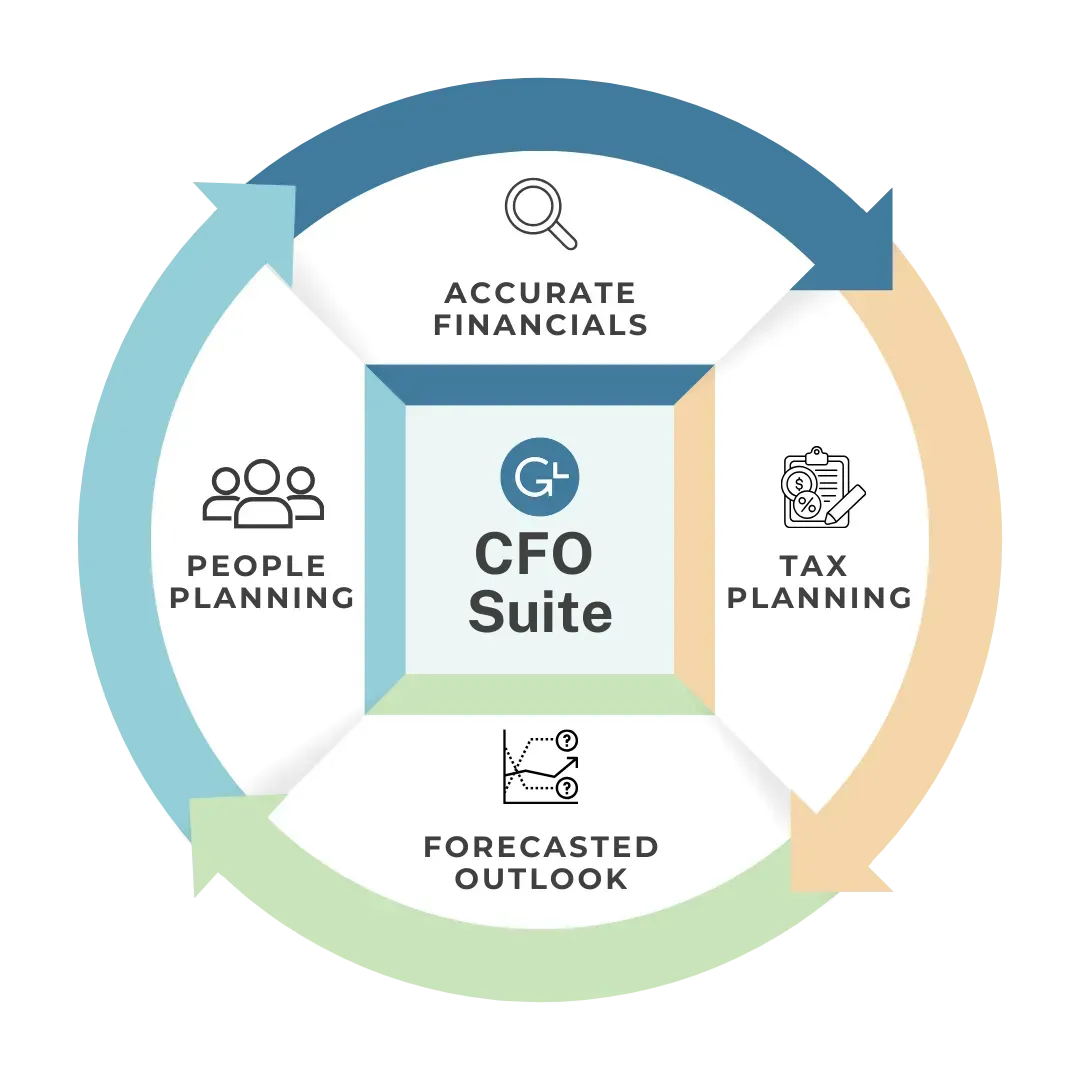
At this level, finance isn’t just supporting the business, it’s all about driving that growth!
Why This Model Works
Most companies outgrow their finance team multiple times:
- A DIY setup early on
- A bookkeeper later
- Then a controller or CFO
Each transition is disruptive, but Finance as a Service removes that friction.
Instead of switching providers, you:
- Start with what you need today
- Add services as complexity increases
- Keep the same team and institutional knowledge
The result is a finance function that evolves with your business without needing to rebuild every step along the way. This modular fit is what truly makes us different.
You don’t need a full finance team on day one.
But you do need:
- Clean data
- Consistent visibility
- A path to scale
The companies that get this right early are the ones that move faster later.
Because growth doesn’t just come from more revenue, but more so the infrastructure that is needed to support it.
Frequently Asked Questions
What is Finance as a Service?
Finance as a Service is a flexible finance model that gives businesses access to accounting, bookkeeping, tax, FP&A, payroll, and CFO-level support as they grow. Instead of hiring a full in-house finance team right away, companies can add the right level of financial support at each stage of growth.
When should a business move beyond DIY bookkeeping?
A business should move beyond DIY bookkeeping when spreadsheets are no longer reliable, tax deadlines are becoming stressful, cash flow is unclear, or financial decisions are being made without accurate data. Clean books are the foundation for better reporting, planning, and growth decisions.
Do early-stage businesses really need financial infrastructure?
Yes. Early-stage businesses may not need complex finance systems, but they do need clean records, proper tax compliance, and separation between personal and business finances. Getting the basics right early prevents bigger problems as revenue, hiring, and operations become more complex.
How does Finance as a Service scale with a company?
Finance as a Service scales by adding support as the business becomes more complex. A company may start with cleanup and bookkeeping, then add reporting, forecasting, CFO advisory, payroll, tax strategy, automation, and deeper financial analysis over time.
What is the difference between bookkeeping and FP&A?
Bookkeeping focuses on recording and organizing past financial activity, such as transactions, expenses, and reconciliations. FP&A, or Financial Planning & Analysis, uses that financial data to forecast future performance, model decisions, evaluate margins, and support strategic planning.
When does a business need fractional CFO support?
A business may need fractional CFO support when financial decisions become more strategic, such as hiring, pricing, fundraising, expansion, cash flow planning, or margin improvement. Fractional CFO support helps translate financial data into decisions that support growth.
Why not just hire an in-house finance team?
Hiring an in-house finance team can be expensive and may not make sense at every stage. Finance as a Service gives businesses access to the right expertise without overbuilding too early. It also allows companies to scale support gradually instead of making large hires before they are needed.
What types of businesses benefit most from Finance as a Service?
Growing businesses with increasing financial complexity benefit most. This often includes startups, service businesses, product-based companies, agencies, construction firms, SaaS companies, and other SMBs that need better visibility, planning, tax strategy, or operational finance support.
What happens if a company waits too long to build its finance function?
Waiting too long can lead to messy books, missed tax opportunities, cash flow surprises, poor forecasting, and reactive decision-making. As the business grows, fixing financial problems becomes more difficult and more disruptive. Building the right foundation early makes growth easier to manage.

Other Content: